
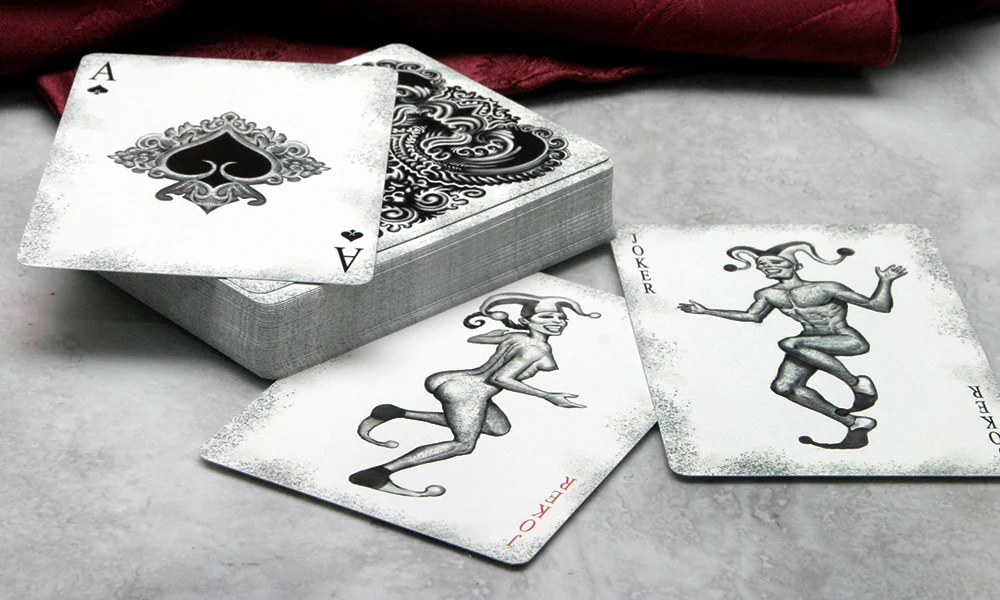

Did you know the very playing cards sitting in your hand might be influencing your decisions without you even realising it? Sure, blackjack is about strategy and skill, but the designs on those tiny cardboard rectangles can have a sneaky way of playing with your subconscious. Like a magician’s sleight of hand, card designs are crafted with subtle tricks that could sway your judgment, and, ultimately, your bankroll.
Below, we’ll break it all down. From color psychology to sneaky patterns and symbols, you’ll discover how those harmless-looking cards might just be a casino’s secret weapon.
The Pop of Color and What It Means
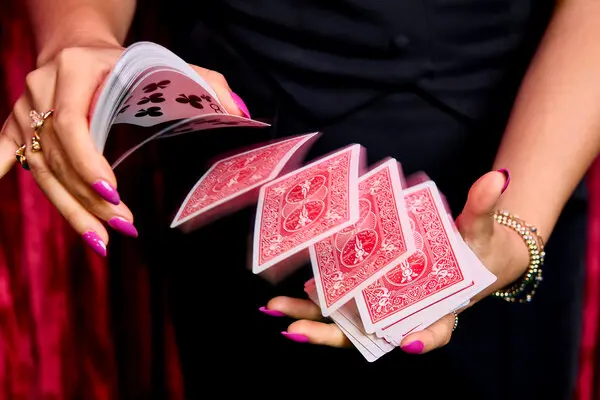
Ever notice how red cards feel a little more “positive” than black ones? Turns out, there’s a reason for that, and it’s rooted in psychology. The colour red is often associated with excitement, energy, and even good fortune. Casinos know this, which is why red tends to evoke a sense of optimism when you see it on a card.
Black cards, on the other hand, might come off as more serious, businesslike, or even intimidating. This subtle difference can impact your decision-making, especially in high-stakes situations. Betting on a red card might feel like a safer or “luckier” choice, even if you’re not consciously aware of what’s influencing you.
Tip to Outsmart This Trick:
Don’t fall for the color trap! Always focus on the value of the card, not how it makes you “feel.” Numbers never lie, colors, on the other hand, do.
Fonts and Symbols- More Than Meets the Eye
Believe it or not, the actual font and symbols on playing cards can also manipulate your perception. Bold and sharp fonts might subconsciously make a card feel more assertive or powerful, while elegant or delicate fonts could make other cards seem “weaker” or less threatening.
Even the intricate artwork on face cards, like the King, Queen, and Jack, may nudge you into viewing them as more significant than they truly are. The refined details may create an illusion of hierarchy, persuading you to base decisions on a card’s appearance rather than its rank.
Fun Fact:
Did you know that some casinos use slightly different card designs to align with regional preferences and psychological cues? One deck might make a Queen look fierce, while another makes her appear docile, all to tweak how players interpret the game!
The Ace of… Psychology?
Ah, the Ace, perhaps the most iconic and emotionally charged card in the deck. Whether it’s an Ace of Spades or an Ace of Hearts, there’s something about that single, solitary pip that holds power. Players often attach immense value to an Ace, viewing it as a symbol of triumph or luck.
This emotional attachment can lead to overconfidence when you draw an Ace. Instead of playing cautiously and weighing all odds, you might push your chips into the pot, convinced your Ace is untouchable, even when the math says otherwise.
Reminder:
An Ace is undeniably valuable, yes, but don’t place it on a pedestal. It’s just one part of the bigger picture, and blackjack is about the full hand you’re dealt.
Are Face Cards Playing Tricks on You?
Face cards come with their own psychological baggage. Kings, Queens, and Jacks often carry an aura of power and superiority. After all, they’re the royalty of the deck, and their presence can boost your confidence, or send your opponents into a spiral of second-guessing.
But this is where the design trick might work against you. The grand imagery can make face cards feel stronger than their numeric counterparts, even though they’re worth the same (10 points). This often leads to players leaning toward aggressive plays when they have face cards, sometimes without good reason.
Pro Tip:
Ignore the “royalty bias” and stick to your strategy. A Jack might look flashy, but if it’s not helping your hand, it’s basically just an underdressed placeholder.
The Subtle Influence of Card Layouts
Even the layout or arrangement of pips (small printed suit shapes) on numbered cards can have an impact. A card with a clean, spaced-out arrangement of symbols might appear more “organized” or reassuring, while densely packed designs could feel overwhelming or chaotic. These design differences may influence how confident or cautious you feel.
For example, a well-spaced 7 of Diamonds could seem “luckier” than other cards with clumped symbols, tricking your brain into thinking it’s a better card than it is.
Combatting This Bias:
Cards are pieces of paper with printed designs. Whether the pips are symmetrical or scattered, it doesn’t change the math. Don’t overthink it, focus on the numbers.
Conclusion
Playing cards are more than just tools for games, they’re subtle instruments of influence designed to make you feel a certain way. By understanding how colors, fonts, symbols, and layouts can manipulate your perception, you can gain a whole new level of awareness in your blackjack play.
Stay sharp and keep emotion out of the equation. After all, in the game of blackjack, the only thing that should drive your decisions is pure strategy. Leave the flashy designs to the cards and keep your focus where it belongs, on the game.
Leave a Comment